
Heavy metals in soil, water and food
Separate rapid field XRF screening from laboratory ICP, AAS and AFS determinations according to sample, elements and sensitivity requirements.
Soil, water and food testing need different sampling and preparation procedures. Instrument choice depends on the target elements, concentrations and purpose: field assessment, process control or testing under a specified procedure.
There is no single quantification limit shared by all matrices and techniques. Assess method capability for the material, preparation and analytical program.
Which method fits the sample?
- Soil and rapid contamination screening: handheld EXPLORER 9000 for elemental XRF screening, with GPS to locate results. Moisture, grain size and uniformity affect interpretation.
- Trace elements in prepared water, soil or food samples: ICP-MS2000, where digestion, interferences and concentration requirements determine suitability.
- Selected determinations such as mercury, arsenic or selenium: AFS200, with an appropriate preparation and analytical procedure.
Screening versus procedure-specific results
Field XRF helps select locations and samples for further analysis. Do not automatically extend this capability to trace determinations in drinking water or food. Procedure-specific results need representative sampling, preparation, calibration and quality control.
Organic compounds require separate techniques such as GC-MS and LC-MS. Elemental methods do not automatically identify chemical species or every compound containing an element.
Separate monitoring tasks include water measurements (MW-3000P) and volatile organic compounds in air (VOC-3000). Available determinations depend on configuration; these instruments are not universal replacements for all water or food metal tests.
Examples for field screening and laboratory work
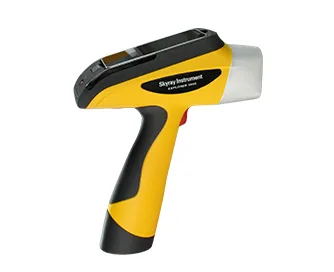
xrf
EXPLORER 9000
Handheld XRF analyzer for heavy metals in soil — in-situ measurement of contaminants (Hg, Cd, Pb, As, Cu, Zn, Ni and more) with GPS for mapping and remediation support.
- Heavy metals in soil: Hg, Cd, Pb, As, Cu, Zn, Ni, Co, V, Cr, Mn
- In-situ measurement for surveys, emergency response and remediation monitoring
- Built-in GPS — pollution mapping and boundary definition
- Handheld, lightweight, water- and dust-proof
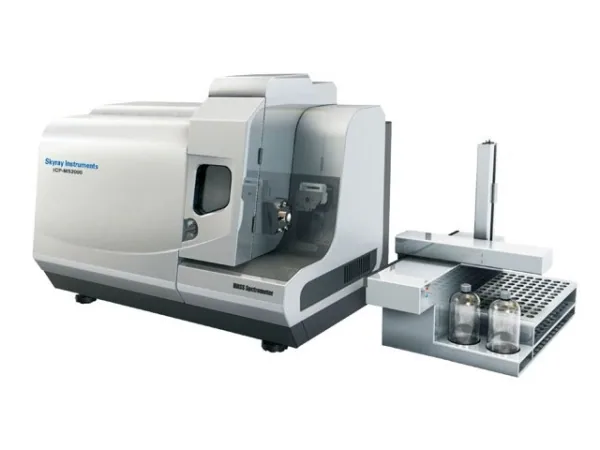
gc-ms
ICP-MS2000
Inductively coupled plasma mass spectrometer (ICP-MS) for micro, trace and ultra-trace analysis of most elements — low detection limits and a wide dynamic range.
- Determination of most elements in the periodic table
- Detection limits at the ppt level
- Wide, multi-order dynamic range
- Simple spectra and low interference
Information needed for instrument selection
Describe the matrix — soil, water, food or air — target elements or compounds, concentrations and quantification limits. Provide the sample-preparation workflow, procedure and throughput. State whether you need field screening, monitoring or laboratory testing.
Questions about selection and measurement
Is handheld XRF sufficient for every heavy-metal test?
No. It can support screening of suitable materials such as soil, but low concentrations in water or food may require another technique and laboratory preparation.
What determines the quantification limit?
The element, matrix, preparation, instrument configuration and procedure. A claim for one material must not automatically be extended to every sample.